
Tag: Nadi Shodana
-
2.36 When truth is established, action and fruition come from that

सत्यप्रतिष्ठायां क्रियाफलाश्रयत्वम् satya pratisthayam kriya phala asrayatvam When truth is established, action and fruition come from that. Yoga Sutras of Patanjali, 2.36 satya = truthpratisthayam = when establishedkriya = actionphala = fruitasrayatvam = hostility This made me think about gardening and how I never know for sure if the plants are going to bear fruit…
-
2.35 When non-violence is established, in that presence hostility is given up.

अहिंसाप्रतिष्ठायां तत्सन्निधौ वैरत्यागः ahimsa pratisthayam tat samnidau vaira tyagah When non-violence is established, in that presence hostility is given up. Yoga Sutras of Patanjali, 2.35 ahimsa = non-violencepratisthayam = when establishedtat = thatsamnidau = in the presencevaira = hostilitytyagah = given up At first when I read this I thought about how to be non-violent…
-
2.34 Whether disturbing thoughts, violence, etc. are done or caused to be done, whether they are preceded by approval, greed, anger or illusion, whether the intensity is mild, medium or intense, the fruit is endless ignorance and suffering. Therefore cultivate the opposite.

वितर्का हिंसादयः कृतकारितानुमोदिता लोभक्रोधमोहपूर्वका मृदुमध्याधिमात्रा दुःखाज्ञानानन्तफला इति प्रतिपक्षभावनम् vitarka himsa dayah krta karitanumodita lobha krodha moha purvaka mrdu madhyadhimatra duhkhajnanananta phala iti pratipaksa bhavanam. Whether disturbing thoughts, violence, etc. are done or caused to be done, whether they are preceded by approval, greed, anger or illusion, whether the intensity is mild, medium or intense, the…
-
2.33 When disturbed by thoughts, cultivate the opposite

वितर्कबाधने प्रतिपक्षभावनम् vitarka badhane pratipaksa bhavanam. When disturbed by thoughts, cultivate the opposite. Yoga Sutras of Patanjali, 2.33 vitarka = thoughtsbadhane = when disturbed bypratipaksa = opposite bhavanam = manifest What do you want in the garden of your mind? What you don’t need anymore can be used for compost and what you want can…
-
2.32 Purity, contentment, discipline, self study and devotion to god are the observances

शौचसंतोषतपःस्वाध्यायेश्वरप्रणिधानानि नियमाः sauca santosa tapah svadhayesvarapranidhanani niyamah. Purity, contentment, discipline, self study and devotion to god are the observances. Yoga Sutras of Patanjali, 2.32 These things might be easy to do when things are going well, but perhaps this is more about trying to do them rather than actually succeeding in the doing. So they…
-
2.31 These great vows are universal, independent of class, place and time.

जातिदेशकालसमयानवच्छिन्नाः सार्वभौमा महाव्रतम् jati desa kala samaya anavacchinnah sarva bhaumah maha vratam These great vows are universal, independent of class, place and time. Yoga Sutras of Patanjali, 2.31 jati = class, birth, speciesdesa = place, spacekala = timesamaya = circumstance, conditionanavacchinnah = not limited by, independent ofsarva = for allbhaumah = spheresmaha = greatvratam =…
-
2.30 Non-harming, truthfulness, non-stealing, consciously directing your energy and letting go are the forebearances.

अहिंसासत्यास्तेयब्रह्मचर्यापरिग्रहा यमाः ahimsa satya asteya brahmacarya aparigraha yamah Non-harming, truthfulness, non-stealing, consciously directing your energy and letting go are the forebearances. Yoga Sutras of Patanjali, 2.30 ahimsa = non-harming, peacefulnesssatya = truthfulnessasteya = non-stealingbrahmacarya = consciously directing your energyaparigraha = letting goyama = forebearances, respect for others The yama are often described in a “things…
-
2.29 Yama, niyama, asana, pranayama, pratyahara, dharana, dhyana and samadhi are the eight limbs of yoga.
यमनियमासनप्राणायामप्रत्याहारधारणाध्यानसमाधयोऽष्टावङ्गानि yama niyama asana pranayama pratyahara dharana dhyana samadhayo’ stavangani Yama, niyama, asana, pranayama, pratyahara, dharana, dhyana and samadhi are the eight limbs of yoga. Yoga Sutras of Patanjali, 2.29 yama = forebearances, respect for othersniyama = observances, recommended habitsasana = yoga posespranayama = breathworkpratyahara = withdrawal of the mind from the objects of senses…
-
2.28 From practicing yoga, the obstacles dwindle and the light of wisdom dawns, leading to clear discernment.

योगाङ्गानुष्ठानादशुद्धिक्षये ज्ञानदीप्तिरा विवेकख्यातेः yoganganusthanad asuddhi ksaye jnanadiptir a vivekakhyateh From practicing yoga, the obstacles dwindle and the light of wisdom dawns, leading to clear discernment. Yoga Sutras of Patanjali, 2.28 yoga = yogaanga = limbsanusthanad = from practicingasuddhi = impuritiesksaye = dwindlingjnana = wisdomdiptih = lighta = culminating in viveka = discernmentkhyateh = clarity This…
-
2.27 Wisdom in the final stage is sevenfold

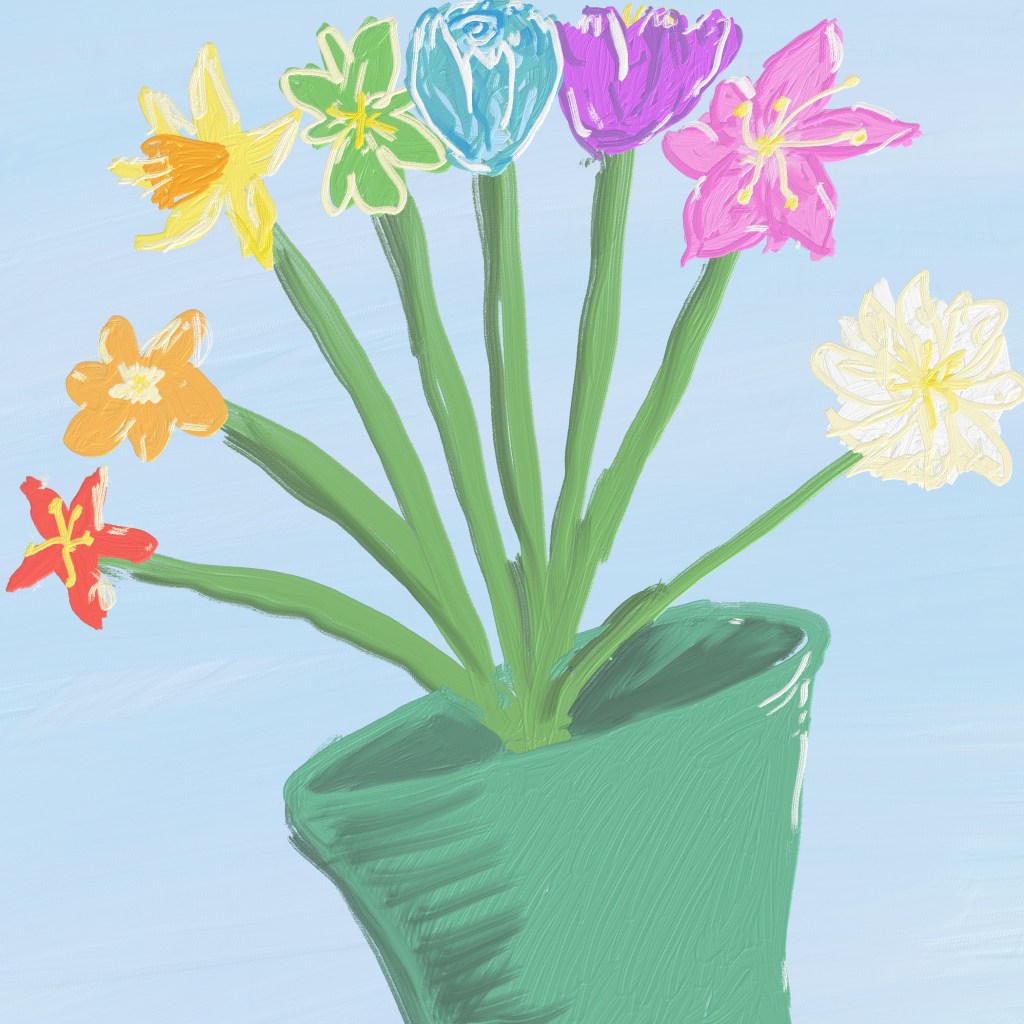
तस्य सप्तधा प्रान्तभूमिः प्रज्ञा tasya saptadha pranta bhumih prajna Wisdom in the final stage is sevenfold. Yoga Sutras of Patanjali, 2.27 tasya = it hassaptadha = sevenfoldpranta = finalbhumih = stageprajna = wisdom The flowers have seven colours to represent the seven stages, connecting with themes like the seven chakras and rainbows! 🌈 This sutra…
-
2.26 Unwavering discrimination is the means for removal

विवेकख्यातिरविप्लवा हानोपायः viveka khyatir aviplava hanopayah Unwavering discrimination is the means for removal. Yoga Sutras of Patanjali, 2.26 viveka = discriminationkhyatir = perceptionaviplava = unwaveringhana = removalupayah = method This reminded me a bit of Mari Kondo and deciding to keep things in your life that spark joy.
-
Gingerbread

These are great fun to make with family and friends and taste delicious with a cup of tea or coffee. Ingredients 100g vegan butter3 tbsp golden syrup100g dark muscovado sugar½ tsp bicarbonate of soda1 tbsp ground ginger1 tsp ground cinnamon250g plain flour50g icing sugar (for icing – optional) Method Based on this recipe 🙏❤️ https://www.bbcgoodfood.com/recipes/ultimate-easy-gingerbread

 Twig Tea